
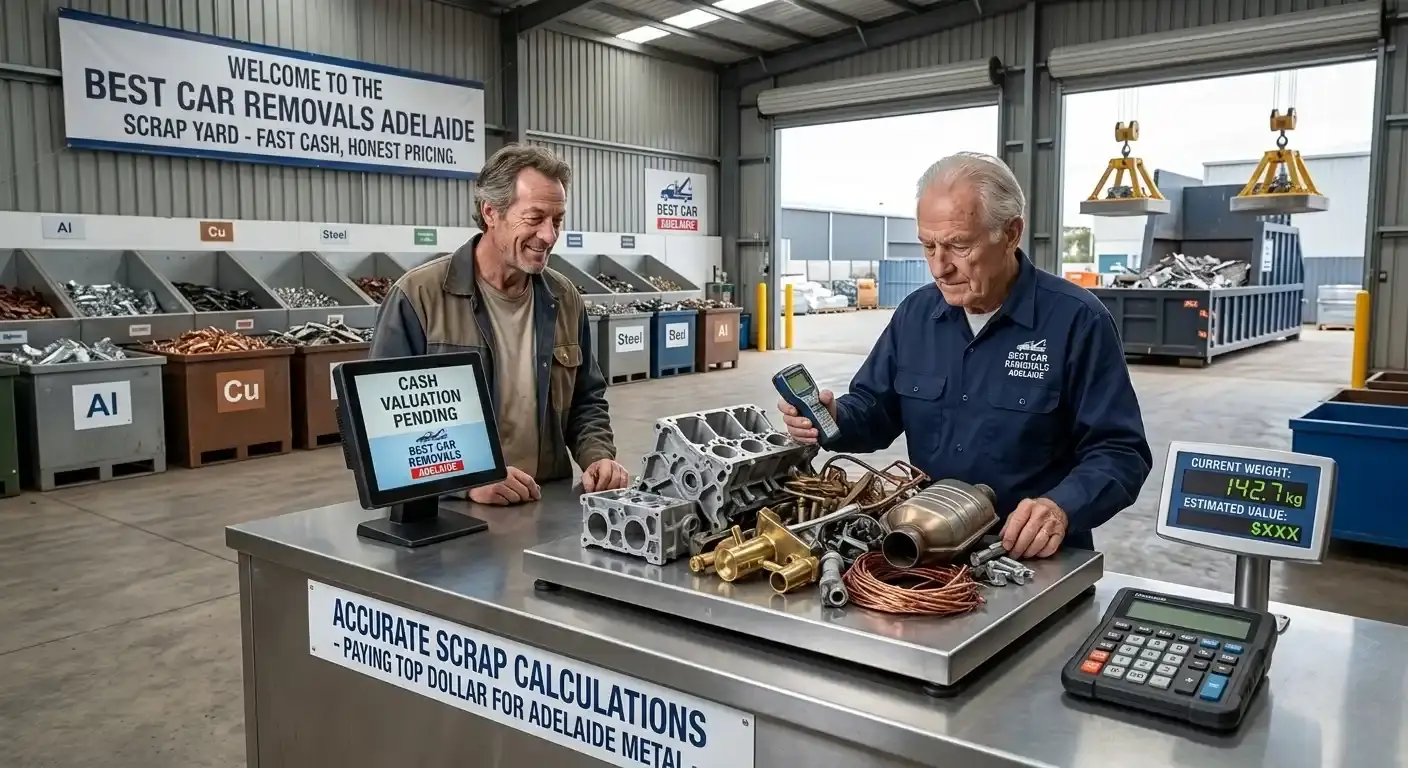
When you are looking at how to quickly generate cash, and you have a car that is old, damaged or just doesn’t run at all, selling it is a great choice. Adelaide car wreckers are no exception as there is a lot of competition in the market and a dozen wreckers that promise the “best price” for the removal of your car. But numerous car owners ask themselves how these businesses determine their cash offers.
Selling a junk car isn’t like selling a used vehicle on the private market. Wreckers and salvage yards don’t consider the Kelly Blue Book value or listings at local dealerships. Rather, they see your car as a stack of raw materials and usable parts. Knowing the procedure for calculating scrap value in South Australia can assist you in negotiating a better deal, and identify lowball offers.
This course will cover the basics of the foundation: Curb Weight and Scrap Steel Market Rates. In determining a car’s scrap value, the number one most important element to consider is the car’s Curb Weight. The gross weight of the vehicle equipped for standard operating with all necessary fluids, but without load or passengers.
The Math Behind the Metal
At the end of its life, the vehicle is crushed, shredded and turned over to steel mills for recycling. Thus, the asking price of your vehicle depends on the prevailing price of your car’s scrap metal in the local and international market.
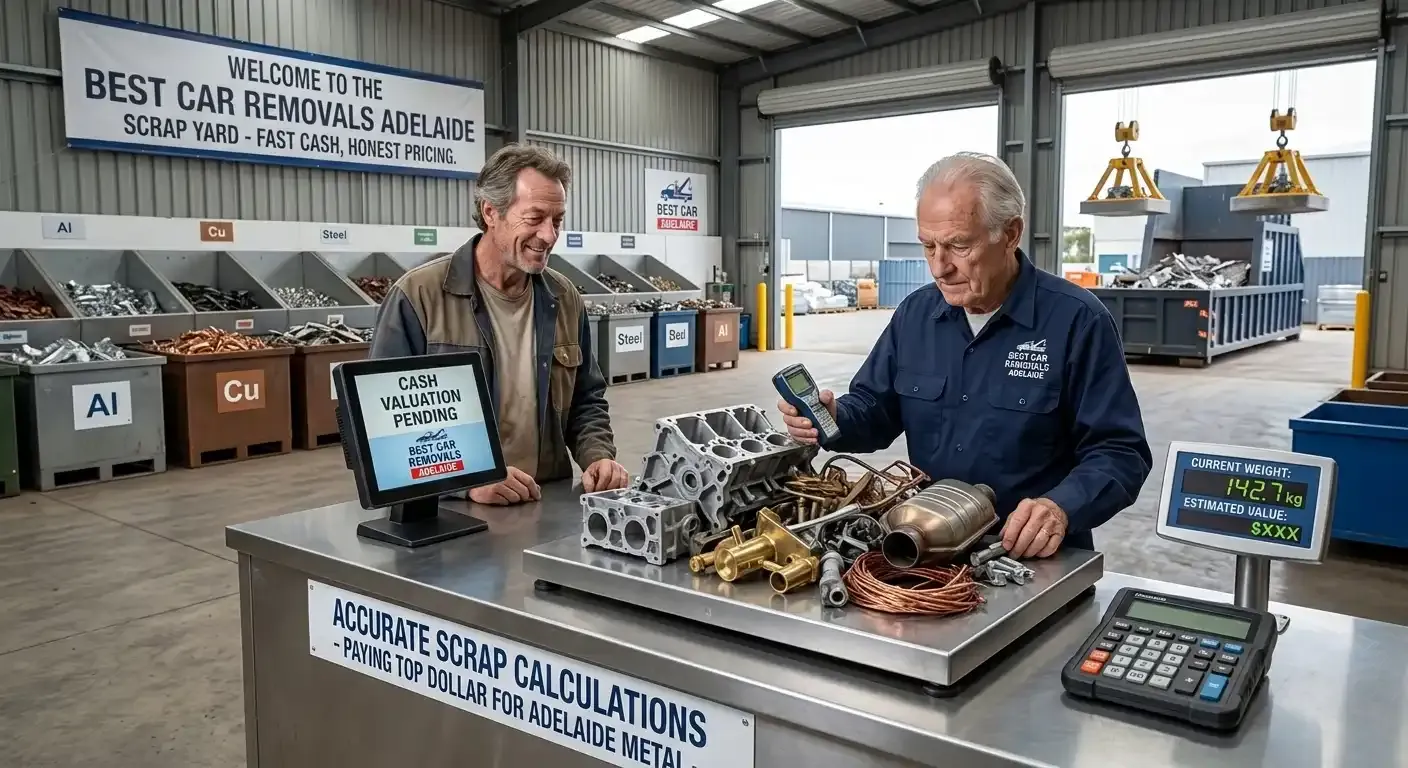
- Ferrous Metals: These are the ones that include iron and steel, which form the major part of your car’s body panels, engine block and frame. The price of ferrous metals is quoted and paid by the metric ton.
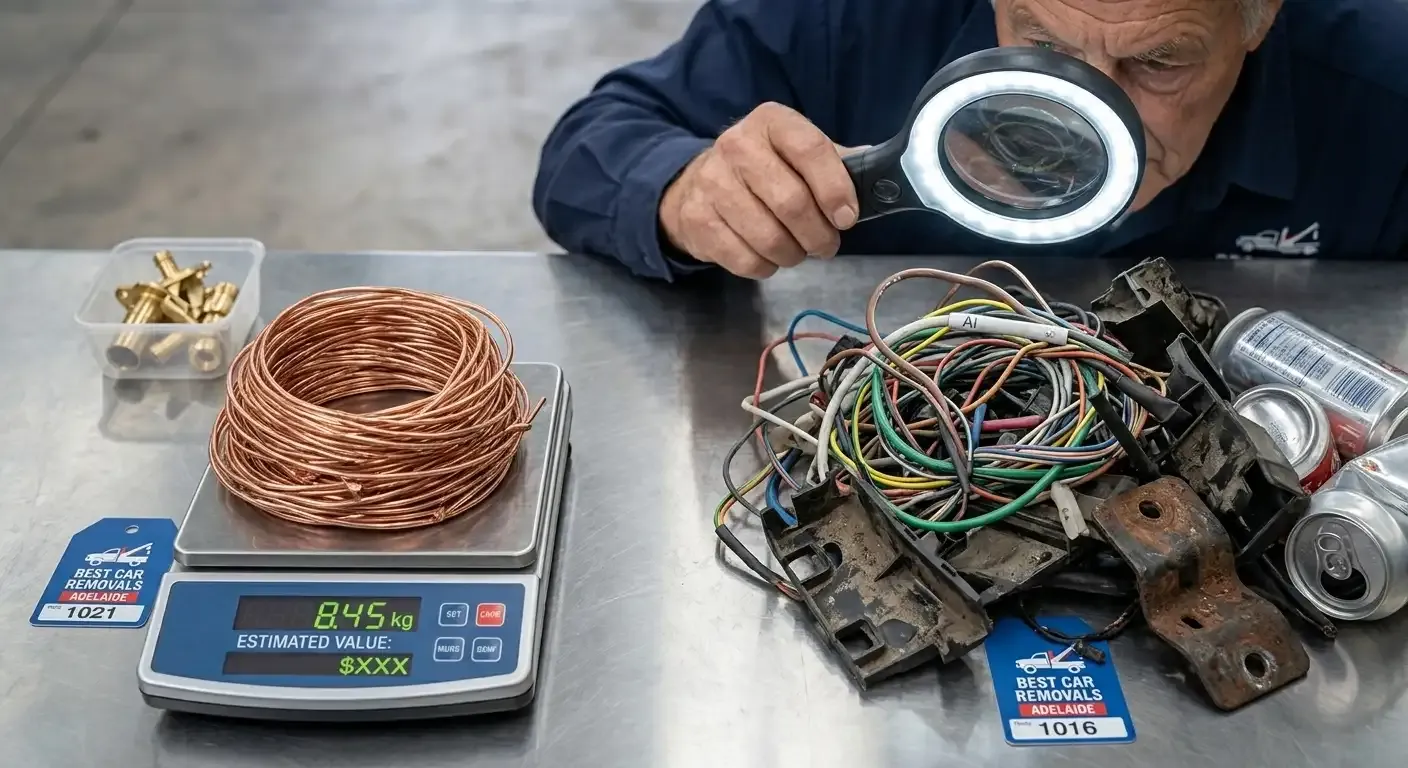
- Non-Ferrous Metals: These are metals which do not contain iron, like aluminum, copper or brass. They only account for a portion of the vehicle, but that portion is worth much more, per kilogram. Your radiator, air conditioning lines and aluminium wheels are all classified in the premium category.
Pays are weight dependent, so the larger your car and its classification, the more the base quote will be. Hatchbacks and small sedans, such as a Hyundai i30 or Toyota Corolla, are the bottom range since they produce less raw weight. Medium sized Australian favourites like the Holden Commodore or Ford Falcon sedan are slightly lighter. Big SUVs and four-wheel-drive vehicles such as a Toyota LandCruiser or Mitsubishi Pajero can fetch big prices. At the top of the price scale are commercial vehicles, which include light trucks and high roof delivery vans such as a Toyota HiAce or Ford Transit, as they are the most massive of their structures.
Premium Components: What Makes These Components Expensive?
A trained Adelaide Auto Wrecker doesn’t simply drive your car onto a scale and give you a level rate for the steel. They test the car and identify parts that are valuable and in demand for the auto parts market, and then strip, refurbish, and resell those parts. When these parts are in good condition, the money you will receive goes way up from the base scrap metal value.
Catalytic Converters
The catalytic converter is one of the most valuable parts, on a scrap car. It is made with valuable metals (platinum, palladium and rhodium) to cleanse the exhaust gases of harmful substances. The price of these metals varies greatly, and a factory-fresh catalytic converter can increase the worth of your automobile by hundreds of bucks. It is important to note that aftermarket replacement converters have much less precious metals and are not as valuable.
Engine and Transmission
The body of a car is rusting or was involved in an accident and the car needs to be scrapped, but the engine and transmission are still in good working order, and the salvage value is quite high. The popularity of mechanical setups like the Toyota’s D-4D diesel or Holden’s EcoTec V6s are always sought after by mechanics and DIY mechanical hobbyists throughout South Australia.
Body Panels and Electronics
Low cost original manufacturer (OEM) body panels are always in demand at the accident repair shops. The wrecker considers these possible sales, and incorporates them into their initial cash sale.
Local Adelaide Factors Influencing Your Offer
Not all the sale of scrap cars is the same in Australia. The amount of cash that you will be able to obtain is influenced by several dynamics that occur locally, and that are specific to the South Australian region.
The Location near Metal Recycling Hubs
There are specific industrial districts in Adelaide, especially in the northern suburbs, where many metal recycling facilities and shredders are located such as Wingfield, Gillman, Parafield Gardens. If you’re close to these recycling centers, transporting the wrecker to the centre isn’t going to cost you much and you can offer them a higher price for the wrecker because of this. If you’re on the outer edge of the city, like the Adelaide Hills, Gawler or really deep into the Southern Suburbs like Noarlunga, you forfeit a bit more as the tow takes longer and uses more fuel.
The Supply & Demand of The Certain Make
There’s a special heritage and regional taste among Adelaide’s automotive past. Manufacturing of such cars has died out at present, but parts for popular locally made cars, such as Holden Commodores and Ford Falcons, continue to be in demand for enthusiasts’ upkeep. At the same time, the huge number of Japanese and Korean fleet cars such as Toyota, Mazda and Hyundai means that there is a steady turnover of parts for wreckers. On the other hand, very rare or unusual models from Europe can have reduced parts prices due to the relatively small buyer demand for those particular parts in the local market.
The Money You Save On The Costs of Your Operation
One of the reasons why you need to understand the final number you will notice on your cash receipt is in order to know the operational expenses of a car removal company. If you’re being offered “Free Car Removal”, the price of the removal service is included in the breakdown of the car’s value. There are costs associated with operating a heavy duty tilt-tray tow truck, including licensing, specialized commercial insurance, regular maintenance, and fuel. Each pick-up is a waste of time and money for the business.
Depollution and Environmental Compliance: Wreckers can not just crush a car straight away. There are strict SA environmental laws governing hazardous waste management. Engine oil, transmission, coolant, brake fluid and air conditioning refrigerant must all be properly drained, contained and disposed of. Of course, batteries and tires need to be separated and responsibly recycled too. Skilled labor is necessary for the process of inventorying a car, safely removing high value parts and preparing the shell for the crusher which has a direct implication in the margin of the yard.
Adelaide Casino Gambling Tips to Get the Most From Your Money.
To lock in the very best deal for your unwanted car, stick to these top-of-the-line tips:
- Never strip a car yourself: Viewed from this perspective, you might consider removing the battery, the alloy wheels or the catalytic converter for resale. But it drastically diminishes what you’re selling to the wrecker’s integrity. It’s easier to tow a chassis with wheels on it than a car on its frame on the grass! Your quote will not be considered if you let wreckers know that items of value are missing.
- Be familiar with your vehicle’s specifications: When seeking a quote, make sure you have your Vehicle Identification Number (VIN), a true make and model, year and an objective estimate of its mechanical condition. Good information will avoid an awkward conversation on the drive way when the tow truck comes for the tow.
- Remove personal property and make a record of ownership: Check your car for any damage. Look in the glove compartment, center console, under seats and inside the CD player. When the car gets on the truck, it’s really hard to find personal belongings. Make sure you have your photo ID on hand so you can establish ownership and ensure that the transaction is legal and stress-free.
- Take off and return your registration plates: Before a car is hauled to the nearest drop off point, the car’s license plates must be kept in the State of South Australia. These plates are to be taken straight to a Service SA branch. They will terminate the vehicle’s registration and provide a pro rata refund check for any month that is not up, based on the month you registered the vehicle. It is money that you have in your pocket and is not from the wrecking company.
Summary
Your vehicle’s scrap value is a clear-cut mix of its physical weight, the current global metal commodities prices, the resale price of the parts on your vehicle and the logistics costs of transporting your car to an Adelaide salvage yard. With these insights and the right approach to registering for car removal in Adelaide, you can confidently enter the car removal Adelaide market and get the best value price for your old car.